
Your leadership philosophy should be more than a polished statement; it should shape what you do when decisions are difficult. Developing a personal leadership philosophy means clarifying the beliefs, values, and guiding principles behind your behavior, then putting them to work in how you lead. It brings together four elements: theory, attitude, guiding principles, and behavior.
You may know what you value as a leader, yet find it harder to explain how those values should guide real decisions. That gap matters. A clear philosophy makes your expectations visible, helps you respond deliberately under pressure, and gives your team a better sense of what to expect from you.
This guide shows you how to reflect on the experiences and assumptions that shaped your approach, turn your insights into a concise statement, communicate it clearly, and apply it in everyday leadership. The goal isn’t an impressive-sounding slogan. It’s a practical compass you can revisit, refine, and use to lead consistently.
Key Takeaways
- Separate your underlying leadership beliefs from the style you use in a particular situation; your approach can adapt while your principles remain clear.
- Reflect on formative experiences, admired leaders, and moments of pride or frustration to identify the values that should guide your decisions.
- Write a concise statement of your commitments, share it with your team, and invite feedback to make its meaning clear in practice.
- Use your philosophy to set mutual expectations, respond deliberately to challenges, and revisit your approach as your responsibilities evolve.
Communicating values and decision-making principles
A leadership philosophy statement brings together your values, vision, purpose, decision-making principles, and expected behaviors. It tells team members what guides your choices and what they can expect from you in difficult situations.
-
Connect Values to Vision and Purpose
Connect your values to a clear vision and purpose before drafting principles. Describe the future you want your organization to create, then explain how your values guide progress toward it. For example, if fairness matters, show how fair access to feedback and opportunities supports that vision. Make sure your purpose describes the impact you seek, not simply a target or task. Values guide the route; vision sets the direction.
-
Articulate Values and Decision Principles
Identify the values you want team members to see in your decisions. Reflect on what matters most, the qualities you admire in others, and experiences that left you proud or frustrated. Pride can signal alignment; recurring frustration may reveal a conflict with your values. Select three or four core values, then define each through observable actions. “Respect” might mean listening without interruption and explaining decisions that affect people.
- Turn those values into decision principles. For each one, complete a sentence such as, “When priorities compete, I will…” A leader who values transparency might explain the reason for a change before describing its effects. State boundaries clearly, too: harassment, discrimination, dishonesty, and unethical conduct are unacceptable. Avoid abstract promises like “I lead with excellence.” Specify what you will do and what team members can expect.
- Communicate your philosophy in three to five sentences, using direct language your team can remember. Include your purpose, core values, and the behaviors that put them into practice. Share it in a team conversation, then ask colleagues what they understand about your decision-making. If their examples differ from your intent, clarify the wording or reconsider the principle. Everyday choices make your commitments visible and give your statement credibility.
What Is a Leadership Philosophy?
A leadership philosophy explains why you lead; your leadership style describes how you lead in a particular situation. Revisit your philosophy once a month and after major milestones, checking whether it still reflects your values, responsibilities, and team’s needs.
-
Distinguish Philosophy from Style
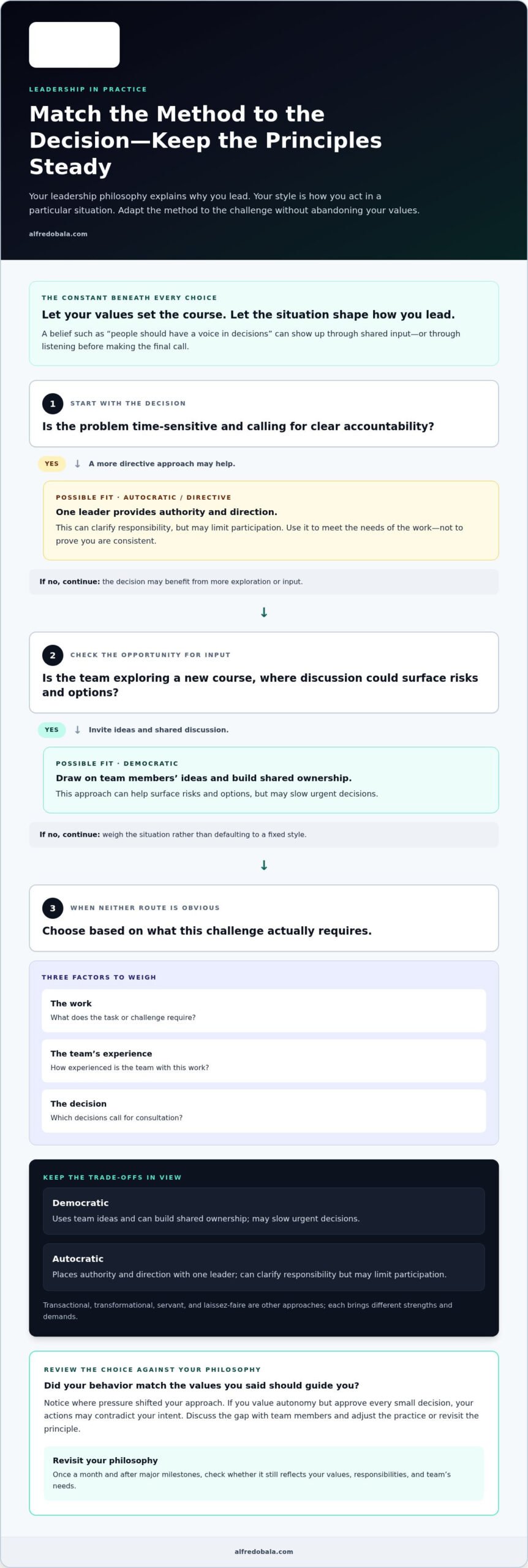
Separate your enduring beliefs from the methods you use to act on them. A philosophy sets the course: you may believe people should have a voice in decisions. Your style determines how that belief shows up, whether by inviting shared input or making the final call after listening. Make sure your preferred style serves your core values rather than becoming a fixed identity.
-
Assess Leadership Style Advantages and Disadvantages
Compare leadership styles by the situations they handle well, then consider the trade-offs. Democratic leadership draws on team members’ ideas and can build shared ownership, but it may slow urgent decisions. Autocratic leadership places authority and direction with one leader, which can clarify responsibility but may limit participation. Transactional, transformational, servant, and laissez-faire approaches each bring different strengths and demands.
- Choose a style that fits the challenge, not one that proves you’re consistent. When a time-sensitive problem calls for clear accountability, a more directive approach may help. When a team is exploring a new course, democratic discussion can surface risks and options. Consider what the work requires, how experienced the team is, and which decisions call for consultation. Adapt your method without abandoning your principles.
- Review real decisions against your philosophy. Note where your behavior matched your stated values and where pressure shifted your approach. For example, if you value autonomy but approve every small decision, your actions may contradict your intent. Discuss that gap with team members and adjust either the practice or the principle. Leadership and Team Development Insights can offer a practical perspective as you examine how leadership choices affect a team.
Leadership philosophy definition and purpose
A leadership philosophy is a set of beliefs and commitments that explains why you lead and how you intend to affect others. For example: “I lead by listening, setting clear expectations, and helping people grow.” An effective statement connects your purpose to choices others can observe.
- Clarify your leadership purpose. Write down why you choose to lead, beyond your job title or authority. Consider what you want team members to experience because of your leadership. You might aim to build an organization where people can raise concerns early and learn from mistakes. That purpose can guide decisions when competing priorities pull you in different directions.
- Examine the beliefs behind your choices. Identify assumptions that influence how you approach responsibility, conflict, and opportunity. For instance, do you believe people perform best with close direction or with room to make decisions? Test each belief against real situations. Reflection can reveal which assumptions support your purpose and which call for further learning.
- Define the impact you want to create. Set a leadership goal that describes an effect on people, the organization, or the wider community. Many leaders consult mentors like Jannine Barron when seeking to align their core vision with regenerative, sustainable practices that extend beyond immediate outputs. “Finish the annual plan” is a task; “help teams make decisions with greater ownership” describes an intended impact. Choose a goal that gives your leadership meaningful direction, then identify behaviors that help move others toward it.
- Draft a concise statement. Write your philosophy in three to five sentences, using plain language and commitments you can demonstrate. For example: “I lead to help people do meaningful work. I listen before deciding and explain the reasons behind difficult choices. I hold people accountable while making room for learning.” Replace broad claims with actions your team can recognize.
- Use the statement as a development guide. Compare a recent decision with your stated beliefs. If you value learning but respond to every mistake with blame, identify what needs to change. A philosophy should help you spot opportunities to develop, not merely describe your ideals. Revise it as experience changes your understanding of leadership and the impact you want to make.
Applying a leadership philosophy in practice
A philosophy matters when it shapes your actions, team culture, and everyday decisions. Put it into practice with clear expectations, regular feedback, and deliberate review.
- Translate principles into team commitments. Explain what team members can expect from you and what you expect from them. If you value accountability, commit to addressing missed deadlines directly and fairly. Ask the team to agree on practical behaviors that support your shared mission. Clear commitments help turn an individual philosophy into a working team culture.
- Connect values to the conditions for good work. Make sure people understand the mission, objectives, and standards. Identify the training, tools, or information they need to meet those expectations. If innovation is a stated value, for example, invite feedback on obstacles and give people room to suggest process changes. Act on useful feedback and explain your decision.
- Use your principles when pressure rises. Pause before reacting to a setback, then choose a response that reflects your commitments. Treat an honest mistake as an opportunity to improve skills, while addressing negligence through fair accountability. Trust team members to make decisions within their responsibilities, and recognize strong contributions with specific thanks or performance feedback.
- Review progress with the team. Hold an After Action Review to discuss whether current practices match the climate your philosophy describes. Ask where communication supported productivity, where expectations were unclear, and which obstacles slowed progress. Agree on a practical adjustment, assign responsibility, and revisit it in the next review. This makes reflection part of the team’s work, not an abstract exercise.
- Revisit and refine your approach. Review your philosophy once a month and after major milestones. Set a short-term leadership agenda for the next several months, then note where your actions support or contradict it. As responsibilities and team needs change, adjust your practices while keeping your core commitments visible. To strengthen this work across a team, explore Leadership and Team Development Insights.
Alfredo Bala (The Motivation Guy): The Motivation Equation
The Motivation Equation offers a practical next step for leaders ready to connect principles with everyday decisions. Its frameworks address motivation and leadership, helping you consider how your commitments can guide individual and team performance. Turn to it when you’ve clarified what matters and want a structured way to put those beliefs into action.
For challenges involving team expectations, growth, or organizational culture, Alfredo Bala’s Leadership and Team Development Insights can help you consider how leadership choices affect others. Speaking offers another way to explore leadership ideas in a group setting. These offerings complement your reflection; your philosophy still needs to be tested through your actions and conversations with your team.
Explore The Motivation Equation and leadership insights, or contact Alfredo Bala (The Motivation Guy) to continue the conversation.
Make Your Philosophy Visible in What Comes Next
A leadership philosophy gains meaning through the choices you make next. Treat an upcoming decision as a practical test: identify the principle at stake, choose an action that reflects it, and notice how your team responds. Developing a personal leadership philosophy becomes an ongoing discipline, not a statement you write once and set aside. Small, consistent actions can make your leadership easier for others to understand and trust.
To keep developing your approach, explore Alfredo Bala’s The Motivation Equation, Leadership and Team Development Insights, and Speaking. Each can support further reflection on motivation, leadership, and how your values shape the way you guide others.
Take the next step that fits your goals, whether that means reflecting independently or exploring a fresh perspective. Contact Alfredo Bala (The Motivation Guy) to continue the conversation. Your leadership philosophy is yours to shape, and each deliberate decision gives it greater force.
Frequently Asked Questions
What is a personal leadership philosophy?
A personal leadership philosophy is the set of convictions that shapes how you use responsibility and influence. It gives you criteria for weighing choices, especially when reasonable people disagree. For example, a leader who values transparency might explain why a project changed direction, even when the update is uncomfortable. The philosophy is personal because it reflects the leader’s beliefs, not a universal formula for leadership.
Why is it important to develop a personal leadership philosophy?
It helps make your leadership more predictable for others, particularly during uncertainty or organizational change. If a project misses a target, a clear philosophy can guide whether you first investigate process gaps, support the team, or reset expectations. Without that internal reference, decisions may shift with pressure or mood. A philosophy can also help you assess whether a role or responsibility fits the leader you intend to become.
How do you identify your core leadership values and beliefs?
Look for patterns in moments when you felt proud of your leadership and moments you would handle differently. Ask what mattered in each situation: fairness, courage, learning, or another principle. Then examine a recent difficult choice. If you consistently protected open discussion, even when it slowed agreement, that may signal a genuine belief in participation rather than a value chosen because it sounds impressive.
What is a step-by-step process for writing a leadership philosophy?
Start by collecting examples from your leadership experience, then identify the belief each example reveals. Choose the principles you’re willing to uphold under pressure. Describe the impact you want your leadership to have, and translate each principle into a behavior someone could observe. Draft a short statement, read it aloud, and remove claims that don’t sound like you or cannot guide an actual decision.
How do you align your leadership philosophy with your actions and decisions?
Before a consequential decision, identify the principle you want to honor and the people it affects. Afterward, compare your choice with that principle. For instance, if you value development, consider whether you gave a capable employee room to solve a problem before stepping in. When your behavior falls short, acknowledge the gap, explain what you’ll change, and follow through in a similar situation.
How can you communicate your leadership philosophy to a team?
Make it a conversation, not a speech. Explain what your principles mean in practical situations, then invite team members to describe how they see those principles in your behavior. For example, ask what respectful disagreement looks like during planning meetings. Use their responses to clarify expectations, and revisit the discussion during onboarding or after a major team change so your philosophy stays connected to daily work.
 EN
 ES
Recent Comments