
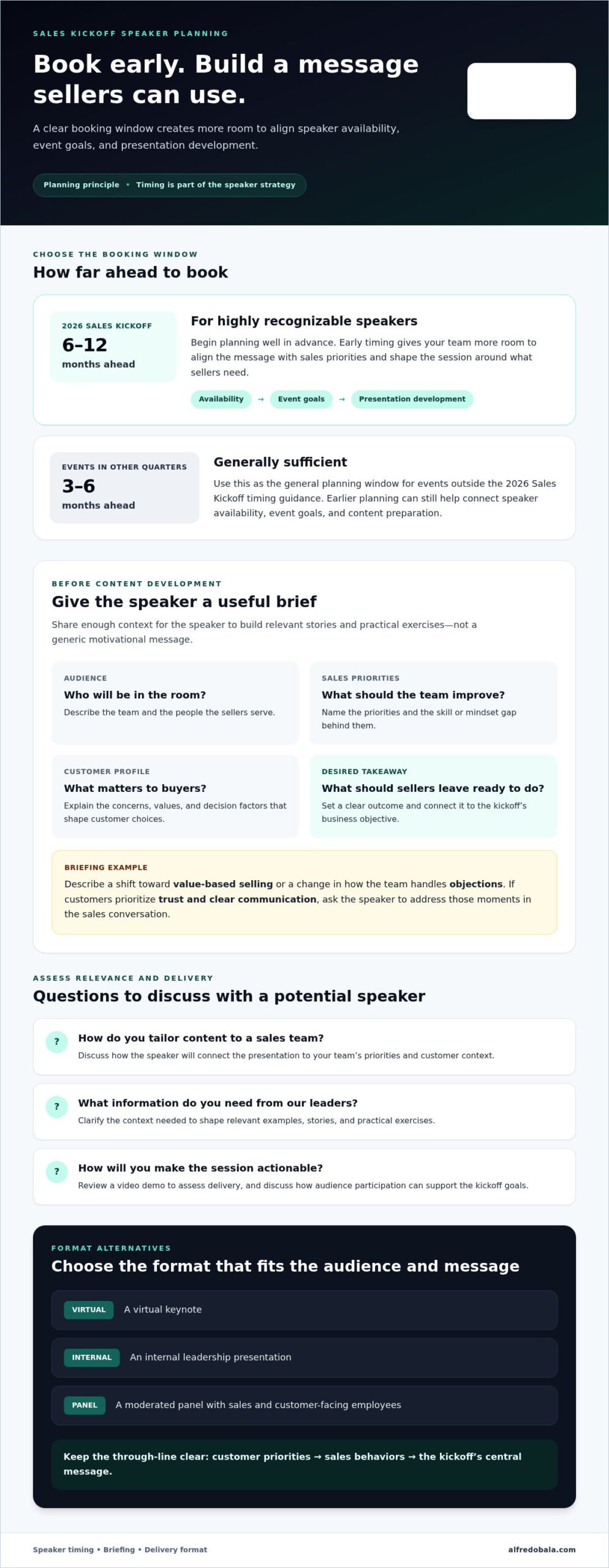
Timing is part of the speaker strategy, not an admin detail. For a 2026 Sales Kickoff, begin six to twelve months ahead for highly recognizable speakers; for events in other quarters, three to six months is generally sufficient. Finding a speaker for a sales kickoff event early gives you more room to align the message with the team’s priorities and shape the session around what sellers need.
It’s easy to focus on a big name or a headline fee, but neither guarantees a strong fit. The speaker should address a real skill or mindset gap and support the business objective behind the kickoff, whether that’s growth, innovation, or stronger client relationships. This guide explains how to choose for impact, plan booking and content development, approach fee and contract decisions, and prepare a practical backup plan. You’ll leave with a clearer path from speaker shortlist to a kickoff message your team can put into action.
Key Takeaways
- Match the speaker’s message to a specific sales skill or mindset gap, not just a broad theme.
- Shape the briefing around your business objectives and give the speaker a clear picture of the team’s needs.
- Clarify the scope, expenses, cancellation terms, and contingency arrangements before finalizing an agreement.
- Build a backup plan and define a practical call to action so the kickoff message carries into the year ahead.
1. What is the average fee for a top-tier sales motivational speaker?
A speaker’s fee depends on experience, demand, sales and speaking background, and expected impact. Those factors are more useful than a generic average when assessing a keynote for your kickoff. A high-profile author may command more than a newer speaker, so compare the investment with the expertise and relevance your team needs.
Start by defining the outcome. If the priority is stronger client relationships, choose a speaker who can connect motivation with practical ways to improve customer conversations. If the challenge is innovation, look for ideas that help sellers adapt their approach. A compelling story can energize a room, but it should lead to skills or decisions employees can use.
A clear purpose gives the message direction. Set a goal for the session, such as building confidence through a difficult sales cycle or improving how teams approach prospects. Then connect it to broader company priorities, including growth, innovation, or client relationships. This makes it easier to judge whether a speaker’s expertise and style fit the kickoff.
Motivational keynotes can take different forms. A story-led presentation may use personal experience to build resilience, while a strategic keynote may focus on decisions and sales habits. An interactive format can invite participation and reflection. Choose the approach that fits your team’s needs, then define a clear call to action for the year ahead.
Before making a commitment, assess the full engagement rather than the fee alone. Consider the speaker’s relevance, the degree of customization, and the value of the session’s intended outcomes. The fee depends on the engagement and its scope, experience, demand, sales and speaking background, and expected impact; a specific price is provided after a quote request. Use those criteria to judge whether the investment supports a meaningful business objective.
2. How far in advance should I book a speaker for a 2026 Sales Kickoff?
For a 2026 Sales Kickoff, book highly recognizable speakers six to twelve months before the event. For events held during other quarters, three to six months is generally sufficient. Earlier planning gives your team more time to align availability, event goals, and presentation development.
Begin with a briefing that explains the audience, sales priorities, customer profile, and desired takeaway. Include a real example, such as a shift toward value-based selling or a change in how the team handles objections. This context helps the speaker shape relevant stories and practical exercises instead of relying on a generic motivational message.
Connect the presentation to customer values and decision-making. Describe what buyers weigh, which concerns affect their choices, and how your sellers currently respond. For example, if customers prioritize trust and clear communication, ask the speaker to address those moments in the sales conversation. A useful keynote helps sellers understand how their actions shape the customer’s experience.
What questions should you ask a potential speaker? Ask how they tailor content to a sales team, what information they need from your leaders, and how they make the session actionable. Review a video demo to assess their delivery, then discuss how audience participation can support your kickoff goals.
What are alternatives to an in-person sales kickoff speaker? Consider a virtual keynote, an internal leadership presentation, or a moderated panel with sales and customer-facing employees. Choose the format that best suits your audience and the message you need them to carry forward.
Set the next step: share the briefing, invite the speaker to seek feedback on the proposed content, and agree on how the session will close. A focused speaker briefing process can clarify the link between customer priorities, sales behaviors, and the kickoff’s central message.
3. Fee negotiation, contracts, and backup talent
Negotiate around the work required, not just the keynote slot. A session with customized examples, audience interaction, and planning discussions has a different scope from a standard presentation. For a speaker engagement, the fee depends on the case and is provided after a quote request, with scope, customization, format, and travel among the cost factors.
Before discussing adjustments, define what the event needs. For example, decide whether the speaker will deliver a keynote only or join a question-and-answer session afterward. A focused scope helps both sides compare the proposed fee with the preparation, participation, and deliverables involved. Finding a speaker for a sales kickoff event is easier when expectations are clear from the start.
Put the agreed details in writing. Record the event date, location or delivery format, presentation length, customization expectations, and any additional appearances. Include who supplies presentation materials and what equipment the venue provides. A precise written agreement gives the planning team a shared reference as the kickoff schedule develops.
Clarify cancellation and rescheduling terms before signing. Ask how changing the event date affects the agreement, and document the process for notifying the speaker. Establish how travel arrangements and related expenses will be handled, too. These points make responsibilities clearer if the schedule or event format changes.
Build a backup plan around the same business objective. Identify an internal sales leader or moderator who can lead a session if the keynote speaker can’t attend. Prepare a concise brief, discussion prompts, and an agenda that works without the original presentation. That keeps the kickoff’s central message intact.
For example, if the session focuses on customer conversations, a sales leader could facilitate a discussion using real scenarios. Keep the backup’s role distinct from a replacement keynote, and don’t assume another speaker can step in automatically. Confirm the alternative format, decision-maker, and communication plan with your event team. When finding a speaker for a sales kickoff event, define this fallback before finalizing the program.
Close negotiations by reviewing the scope and contingencies together. Confirm that the written agreement reflects the intended session, and assign one person to manage speaker communications. Clear responsibilities help your team protect the event plan while keeping attention on the sales outcomes the kickoff is meant to support.
4. Sales kickoff speaker fees
Plan the budget around the speaker’s contribution, not reputation alone. A globally recognized keynote speaker may command a six-figure fee, while sales kickoff speakers span a broad range based on experience, demand, and expected impact. A number without context says little about whether the session suits your event.
Start with the engagement scope. A keynote tailored to your sales strategy may involve more preparation than a standard presentation. A live appearance may also involve travel and event logistics. A speaker’s fee depends on the engagement and is provided after a quote request; experience, demand, sales and speaking background, customization, and expected impact shape it.
Compare proposals against the same criteria. For example, one speaker may offer a strong sales track record, while another brings broad name recognition. Decide which matters more for your audience and business goal. A #1 New York Times bestselling author will charge a higher fee than a new speaker, but the premium only makes sense if that authority strengthens the kickoff.
Separate the speaking fee from other event expenses. Keep those costs distinct so you can see where the investment goes.
Use a simple decision test before committing: name the business outcome, identify the speaker’s relevant expertise, then assess the proposed session’s fit. If the goal is improving customer conversations, ask whether the speaker can connect motivation to practical sales behavior. A memorable presentation without that useful connection may not serve the objective.
Build your budget around the full value of the engagement, including preparation, relevance, and audience impact. Discuss your sales kickoff goals and use them to shape a focused speaker brief.
Alfredo Bala (The Motivation Guy): The Motivation Equation
Alfredo Bala, known as The Motivation Guy, offers The Motivation Equation, a practical guide to motivation and leadership. If your kickoff needs to connect an energizing message with ideas leaders and teams can apply, the book provides a foundation for that conversation. Alfredo also offers Leadership and Team Development Insights and Speaking for organizations focused on team development and growth.
Consider this next step when your event calls for more than a motivational moment: a message grounded in leadership principles and relevant to how teams work together. Share your kickoff’s central objective and the challenge you want the session to address. That context can help shape a meaningful discussion about motivation, leadership, and team development.
Contact Alfredo Bala (The Motivation Guy) to discuss your sales kickoff goals and the right next step.
Turn the kickoff message into a commitment
A sales kickoff should create a clear starting point for the work ahead, not just a memorable moment on stage. Before the event, decide what you want people to think, discuss, or do differently afterward. Then make that intention visible in the agenda, the speaker’s message, and the conversations managers continue with their teams.
That alignment is at the heart of finding a speaker for a sales kickoff event. The right fit connects the event’s purpose with the realities sellers face, giving leaders a shared language to carry the message into everyday decisions. Keep that thread alive after the applause: invite teams to reflect on one idea, discuss where it applies, and connect it to their customer work.
If you want to explore a leadership-focused perspective for your event, contact Alfredo Bala (The Motivation Guy). Bring your kickoff’s central objective and the shift you hope to inspire. A deliberate next step can help turn event energy into focused action and give your team a stronger beginning.
Frequently Asked Questions
How far in advance should I book a speaker for a 2026 Sales Kickoff?
For a highly recognizable speaker, start booking six to twelve months before a 2026 kickoff. That lead time gives your team space to coordinate the speaker’s schedule with venue planning and internal approvals. If your event takes place in another quarter, three to six months is generally sufficient. Build the speaker decision into the event plan early, rather than treating it as a final agenda detail.
Is it better to book a celebrity or a sales-specific thought leader for an SKO?
A sales-specific thought leader is often the stronger choice when practical relevance is the priority; a celebrity may fit an event built around broad inspiration or recognition. For example, a team refining its discovery conversations may benefit from expertise directly connected to sales. Compare each candidate’s subject matter, audience appeal, and ability to support the kickoff objective, then choose the profile that best serves the experience you want to create.
What is the average fee for a top-tier sales motivational speaker?
There’s no useful average for every top-tier speaker because fees vary with demand, experience, sales and speaking background, and expected impact. A globally recognized keynote speaker may command a six-figure fee. To assess value, compare the proposed engagement’s scope and relevance with your objectives. A prominent name alone doesn’t establish whether the speaker is the right investment for your team.
How do I find and choose a speaker for a sales kickoff event?
Start with the outcome your team needs, then shortlist speakers whose expertise relates to it. For example, if sellers need to strengthen client relationships, look for relevant experience and a message that connects motivation with customer-facing work. Review a video demo to assess delivery, and ask how the speaker adapts content for a sales audience. Choose based on fit, not name recognition alone.
How much does a sales kickoff speaker cost in the United States?
There’s no single cost for a U.S. sales kickoff speaker. The fee depends on experience, demand, sales and speaking background, expected impact, and engagement scope. Separate the speaker’s fee from event expenses such as travel, venue, and production when building your budget. That distinction helps you compare proposals fairly and see how the full event plan affects your investment.
How far in advance should I book a sales kickoff speaker?
For a highly recognizable speaker, plan six to twelve months ahead. For events held during other quarters, three to six months is generally sufficient. Work backward from the event: settle the speaker decision, provide the sales-team briefing, and leave time to shape the presentation. If your preferred speaker is central to the program, make that decision an early planning priority.
 ES
 EN
Comentarios recientes