
What if the most inspiring keynote is the wrong choice for your conference? A leadership speaker for annual conference should do more than command the stage. The right speaker connects the event’s theme to leadership actions your organization needs, giving attendees ideas they can use to think through real workplace challenges. Choosing someone who can energize the room and satisfy executives can feel like a lot of pressure, especially when a polished talk still risks feeling generic or detached from company priorities.
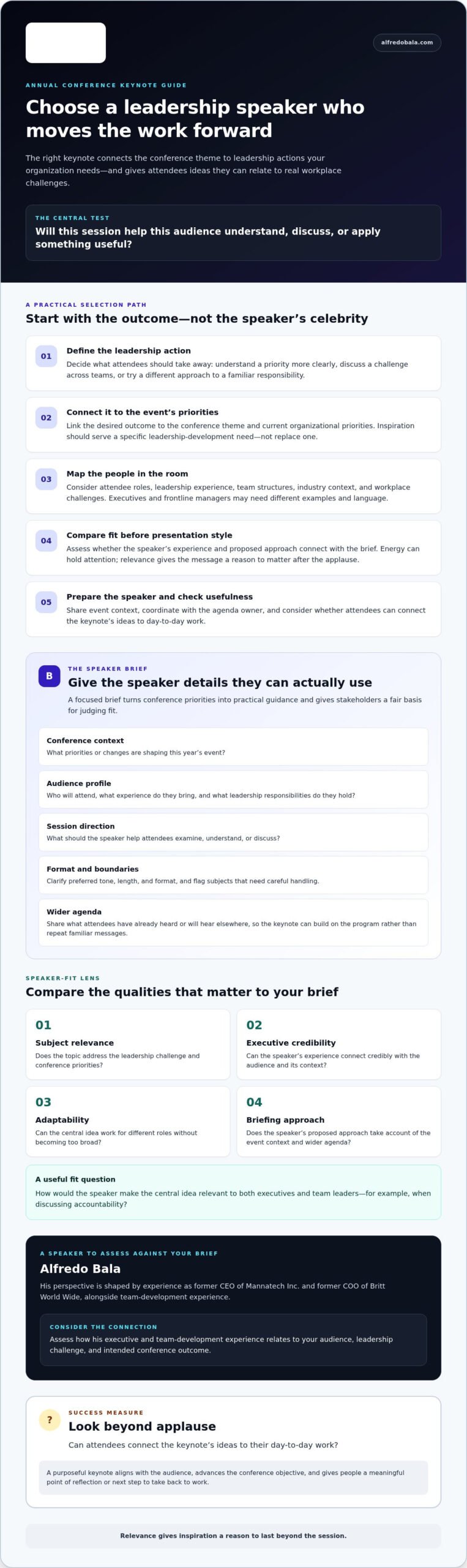
Start by defining the action you want the conference to inspire. This article will help you write a focused speaker brief, assess relevance and experience, and set success measures you can explain to stakeholders. You’ll also consider how Alfredo Bala’s perspective, shaped by his experience as former CEO of Mannatech Inc. and former COO of Britt World Wide, may inform a leadership conversation. The goal is a purposeful experience, from aligning the keynote with conference priorities to checking whether attendees can connect its ideas to day-to-day work.
Key Takeaways
- Define the leadership action you want attendees to take, then use it to shape a focused keynote brief.
- Consider audience seniority, industry context, and organizational change when assessing whether a topic will resonate.
- Compare speakers on subject relevance, executive credibility, adaptability, and their approach to event briefings.
- Give the speaker clear event context and coordinate with the agenda owner to connect the keynote to the wider program.
- Assess whether a leadership speaker for annual conference fits your audience’s needs, including how Alfredo Bala’s executive and team-development experience relates to your brief.
What Should a Leadership Speaker for an Annual Conference Help Your Team Do?
A keynote has to earn its place in a crowded agenda. It competes with business updates, team sessions, and the limited attention attendees can give each part of the day. A leadership speaker for annual conference should do more than lift the room’s energy. The session should connect leadership ideas to what this audience needs to understand, discuss, or apply.
That distinction matters. An engaging delivery can hold attention, but entertainment isn’t the event’s purpose. Strong public speaking helps a speaker communicate clearly; relevance gives the message a reason to matter after the applause. Use energy to advance the conference objective, not distract from it.
What a leadership speaker contributes: A focused session linking leadership ideas to the audience’s needs and the conference’s purpose, with a useful point of reflection or next step attendees can take back to work.
Start with the conference outcome, not the speaker’s celebrity
Before comparing names, decide what attendees should take away. Should they understand a leadership priority more clearly, discuss a challenge across teams, or try a different approach to a familiar responsibility? A defined outcome gives you a practical way to assess speaker fit.
Next, connect that outcome to the conference theme and current organizational priorities. If the event is about leading through change, a broad message about personal potential may create a positive mood but leave the central challenge untouched. A more focused session could help leaders consider how they communicate uncertainty or support teams through transition. Inspiration can be valuable, but it should serve a specific leadership-development need rather than substitute for one.
Match the message to the people in the room
Map the audience before shaping the brief. Note who will attend, their leadership experience, how teams are structured, and which workplace challenges matter most. Executives may need a different conversation from frontline managers dealing with daily team decisions. For a mixed audience, look for language and examples that connect across roles without becoming so broad that no one recognizes their own work.
Use those details to guide the topic, examples, and level of challenge. Share the audience profile and intended outcome when discussing fit, then confirm that the proposed approach addresses both.
A successful keynote aligns its message with the audience, advances the conference objective, and gives people a meaningful next step.
Matching Leadership Keynotes to Your Conference Audience
A strong brief turns conference priorities into guidance a speaker can use. It also gives you a fair basis for judging fit before presentation style or reputation dominates the conversation. Start with the event’s central priority, describe who will be in the room, and identify the leadership challenge the session should address.
Build a brief a leadership speaker can actually use
Make the brief practical, not abstract. Include the conference theme, attendee roles and experience, relevant business context, and the session’s purpose. Clarify the preferred tone, length, and format, and flag subjects that need careful handling. Share what attendees have already heard or will hear elsewhere in the program, so the keynote can build on the agenda instead of repeating familiar messages.
- Conference context: What priorities or changes are shaping this year’s event?
- Audience profile: Who will attend, and what leadership responsibilities do they hold?
- Session direction: What should the speaker help attendees examine or discuss?
- Practical boundaries: What format and tone suit the program, and what topics need care?
Seniority and industry context affect what feels credible. Executives may be focused on setting direction across an organization, while frontline managers may need language for guiding teams through day-to-day change. In a mixed room, ask how the speaker would make the central idea relevant across roles without overlooking their different responsibilities. Organizational change matters, too. A session about leading through uncertainty should reflect the kind of change attendees are facing, not rely on generic examples.
Test relevance before comparing presentation styles
Compare the speaker’s experience with the brief. Ask how that experience connects to your audience and what examples could make a complex leadership idea clear. For instance, ask how the speaker would explain accountability in terms that both executives and team leaders can recognize. The goal is clarity and relevance, not a promise of guaranteed engagement, changed behavior, or business performance. Harvard’s guide to improving public speaking skills offers context for assessing communication, but delivery alone can’t establish topic fit.
Ask how the keynote will reflect the event’s context without becoming a company sales pitch. A good speaker can work with the priorities in your brief while keeping the session focused on audience value. For a broader selection framework, consult our leadership speaker selection guide for corporate events as you look for the right leadership speaker for annual conference programs. If Alfredo Bala (The Motivation Guy) and his executive and team-development perspective seems relevant to your brief, review his speaking perspective as part of your evaluation.
How to Compare Leadership Speakers for an Annual Conference
Once your brief is clear, compare candidates against the same criteria. A polished reel can show presence, but it can’t establish whether a speaker understands your audience, explains leadership ideas in practical terms, or will shape the session around your event. Stage energy alone is not evidence of conference relevance.
Use the questions below with each candidate. Ask for evidence that relates to your priorities, and verify claims before using them to justify your choice of a leadership speaker for annual conference.
| Criterion | Questions to ask | Evidence to request |
|---|---|---|
| Subject relevance | Which leadership themes connect to our conference objective? How would you make a complex idea practical for this audience? | Examples of relevant topics, a session outline, or a sample of the speaker’s work. |
| Executive credibility | What professional experience informs your perspective on this subject? | A verifiable biography and specific examples of relevant leadership responsibilities. |
| Audience adaptability | How would you address our audience’s roles, experience levels, and industry context? | Examples of how the speaker has adapted a message for different audiences, where available. |
| Briefing approach | How will you use our event brief? What information would help you avoid generic or repeated content? | A description of the preparation process and how the proposed session reflects the event’s purpose. |
Evaluate experience, message, and audience fit
Look beyond a speaker’s public profile. Ask which professional experiences shape their perspective and how those experiences relate to the challenges your attendees face. Then assess whether they can explain an idea plainly, connect it to a workplace situation, and show why it matters to the conference. Reputation may open the conversation; evidence of fit should guide the decision.
Ask questions that expose a generic keynote
A motivational keynote can feel generic when it relies on familiar themes without reflecting the event brief. Ask how the audience profile and conference priorities would shape the session. Discuss how the speaker handles questions, interaction, or a room with varied leadership experience. A useful answer should connect your context to the speaker’s approach without promising guaranteed engagement or results.
Request references or examples where available, and confirm claims before relying on them. You can also review this additional speaker-selection reference as one input, alongside direct evidence from the speaker. The strongest choice is the person whose experience, message, and preparation approach align with your brief.
How to Prepare Your Annual Conference Speaker for a Useful Keynote
A thoughtful choice needs thoughtful preparation. Give the speaker enough context to shape the session, then plan how the keynote will connect to the rest of the event and how attendees can reflect on its ideas afterward. This helps a leadership speaker for annual conference contribute to a coherent audience experience instead of appearing as a standalone item on the agenda.
Coordinate the brief, agenda, and audience experience
Work with the agenda owner to align the session with the event’s flow. Confirm its objective, timing, format, introduction, and audiovisual requirements. Share the conference theme, audience profile, relevant organizational context, and what attendees have already heard. Be candid about challenges the speaker should understand, while withholding sensitive or confidential details that aren’t necessary.
Discuss how the keynote should connect to the sessions around it. If a leadership discussion follows, agree on which ideas that session will build on. If the keynote opens the conference, clarify what themes it should introduce for the days ahead. Confirm practical requirements directly with the speaker, including format and technical needs.
- Before the event: Share the brief, confirm logistics, and agree on the session’s role in the agenda.
- At the event: Coordinate the introduction and handoffs with the agenda owner so the session feels integrated.
- After the session: Capture attendee reflections and route relevant themes to the internal leaders responsible for follow-up.
Agree on useful success indicators before the event, without assuming the keynote alone can produce a specific outcome. You might gather attendee reflections on whether the session addressed the conference theme, or ask internal leaders to note which ideas merit further discussion. Keep measures proportionate to the session’s purpose, and distinguish immediate reactions from longer-term organizational results.
Plan what happens after the keynote
Give attendees a simple prompt to carry the message into conversation: “What leadership idea from this session could we apply to a current team challenge?” The agenda owner can use it in a facilitated discussion, reflection exercise, or existing follow-up channel. Coordinate with internal leaders so useful ideas connect to development work already underway, rather than creating a separate initiative without a clear owner.
For additional perspective on motivation and leadership, explore The Motivation Equation as a related resource, not a replacement for event planning. A clear brief, coordinated agenda, and deliberate follow-up help the keynote move from the stage into the wider conference experience.
Choosing Alfredo Bala as a Leadership Speaker for Your Annual Conference
Alfredo Bala, known as The Motivation Guy, brings an executive perspective shaped by leadership roles and long experience in the network marketing profession. He is the former CEO of Mannatech Inc. and former COO of Britt World Wide, and has been active in the profession since 1980. He is also an author, professional speaker, and executive advisor whose work includes leadership and team-development insights.
Those credentials offer context, but they don’t make any speaker the right fit for every event. Assess a leadership speaker for annual conference against the audience, conference priorities, and session purpose. Consider where Bala’s experience and perspective connect to your brief, then confirm the proposed topic and approach directly.
Where Alfredo Bala may fit your conference brief
His former CEO and COO roles may be relevant if attendees would benefit from an executive viewpoint on leadership and teams. If the event theme includes motivation, The Motivation Equation, which Bala authored, may be worth discussing as a framework related to that theme. The case for fit depends on the specific question your conference wants attendees to explore, not credentials alone.
For example, if your brief focuses on leadership responsibility or team development, ask how his experience could inform the discussion and what perspective he would bring to your audience. If the program needs expertise in another area, establish that before proceeding. Confirm current keynote topics, format, availability, and event requirements directly rather than assuming they match your plans.
Take the next step with a clear event brief
Prepare the essentials before opening a conversation: your audience profile, conference objective, event date, preferred format, session timing, and relevant event requirements. Include the leadership challenge the keynote should address and how the session fits into the wider agenda. A concise brief makes it easier to discuss whether the topic and speaker’s perspective align.
Use the first conversation to assess fit, clarify practical details, and decide whether to move forward. It’s a considered step, not a commitment to book. Discuss your event goals and current speaking details with Alfredo Bala about your annual conference keynote, then base your decision on how well the proposed session serves your audience and conference purpose.
Make Your Keynote a Purposeful Part of the Conference
Choose a leadership speaker for annual conference by starting with the leadership action you want the event to encourage. A clear brief grounded in attendees’ roles and current priorities helps you assess relevance beyond reputation or stage presence. Then align the keynote with the agenda and plan a practical way for attendees to reflect on its ideas afterward.
Alfredo Bala brings an executive perspective shaped by his former roles as CEO of Mannatech Inc. and COO of Britt World Wide. As a leadership speaker and author of The Motivation Equation, he may be worth considering when his experience and themes fit your event’s purpose. Confirm current topics, format, and availability as part of your selection process.
Share your audience profile, conference objective, date, and session requirements to begin a focused conversation. Discuss your annual conference keynote and explore whether Alfredo’s perspective aligns with your goals. With a suitable fit and thoughtful preparation, your keynote can give the conference a clear direction and attendees ideas to carry forward.
Frequently Asked Questions
How do I choose a leadership speaker for an annual conference?
Start by defining what you want attendees to consider, discuss, or apply, then describe the audience and conference theme. Compare candidates on relevant experience, clarity, adaptability, and how they use a detailed brief. Ask each speaker how they would shape the session for your attendees and priorities. A strong leadership speaker for annual conference should fit the event’s purpose, not just impress through name recognition or stage energy.
What should a leadership speaker cover at an annual conference?
A leadership keynote should address a challenge that matters to the organization and the people attending. Possible themes include leading through change, developing teams, or sustaining motivation, but the right focus depends on the event objective and audience profile. Agree on the topic with the speaker in advance. Consider how the keynote connects to the sessions before and after it, so the message supports the wider agenda rather than feeling like a standalone motivational break.
How far in advance should I book an annual conference speaker?
There isn’t one booking timeline that works for every event or speaker. Begin your search once the conference date, audience, and objectives are taking shape, then confirm availability directly with potential speakers. Allow time for internal approvals, contracting, briefing, and event logistics. The right lead time depends on the speaker’s current schedule and your organization’s process, so don’t assume a candidate is available until the details are confirmed.
How can I tell if a keynote speaker will be relevant to our audience?
Share a clear audience profile and event brief, then ask the speaker to explain how those details would shape the session. Look for a credible connection between their experience and your leadership priorities, supported by relevant examples or references where available. Verify claims before relying on them. A relevant keynote should make sense for your attendees and event objective, rather than promise broad inspiration or rely on reputation alone.
Can a leadership keynote create lasting change after the conference?
A keynote can introduce ideas and give attendees a shared point of discussion, but it can’t guarantee lasting organizational change on its own. Follow-through depends on leaders, team practices, and the wider development environment. Plan a reflection prompt linked to the conference theme, connect useful ideas to existing priorities, and decide who will carry the conversation forward. Avoid promising measurable results without evidence to support those claims.
What should I include in a speaker brief for an annual conference?
Include the event purpose, conference theme, attendee roles and experience levels, relevant organizational context, session length, format, and preferred tone. Explain how the keynote fits into the agenda and what attendees have already heard. Note any subjects that need careful handling. A clear brief gives the speaker useful context and boundaries while leaving room for an authentic presentation tailored to the event’s purpose.
Is Alfredo Bala available to speak at annual conferences?
Alfredo Bala offers professional speaking, but confirm his current availability, event formats, and engagement details directly. Before reaching out, prepare the conference date, location or delivery format, audience profile, event objective, and preferred session length. This information helps establish whether his experience and proposed topic align with your event. Don’t assume availability or a particular keynote subject without confirmation.
 EN
EN  ES
ES
Recent Comments